
From Chlorine to Carnegie Hall
Movement IV: Doc, Ed, and a Desert Island Album
This essay is part of a four-movement series, From Chlorine to Carnegie Hall.
Movement IV reflects on lineage—how musical values, sound, and joy are passed from one generation to the next.
The fourth and final pivotal recording that changed my life, and ultimately set the course for my professional journey, arrived in 1987. Somewhere in the early eighties, I had become a fan of The Tonight Show Starring Johnny Carson. My father was a loyal viewer, and watching Johnny became part of our nightly rhythm. That show was a cultural anchor back when most of the country still tuned in to the same voice at 11:30 p.m. every night. If Johnny said it, chances were you’d hear it repeated the next day.
As much as I loved Carson’s humor, I found myself increasingly drawn to something else: the Tonight Show Band. Led by Doc Severinsen, that ensemble was unlike anything I had ever heard. I didn’t even know a trumpet could sound like that. It was bold, brassy, and full of color. Even on nights when I couldn’t stay up for the whole show, I’d stay awake just long enough to hear the iconic “Here’s Johnny!” and that explosive opening theme. Only then could I sleep.
For my money, that remains the greatest big band I have ever heard. They were comprised of veterans from the legendary swing orchestras: Basie, Ellington, Maynard Ferguson, and Buddy Rich. I had always hoped they would release a formal recording, and in 1987, they finally did: The Tonight Show Band with Doc Severinsen, Volume One.
I saved my money and bought the cassette the moment it hit the shelves. The opening track was “Begin the Beguine.” I had always liked Artie Shaw’s version, with its mysterious, almost through-composed structure, but when Doc and the band played it, I was absolutely hooked. I remember listening to it for the first time during a drive to visit my Aunt Carol and Uncle Joe in Northeast Philadelphia. The ride was about 40 minutes, and I restarted the album before we even arrived. I didn’t want to get out of the car. I just wanted to keep listening. I wore that cassette out and eventually bought the LP, making backup copies just to preserve the original vinyl.
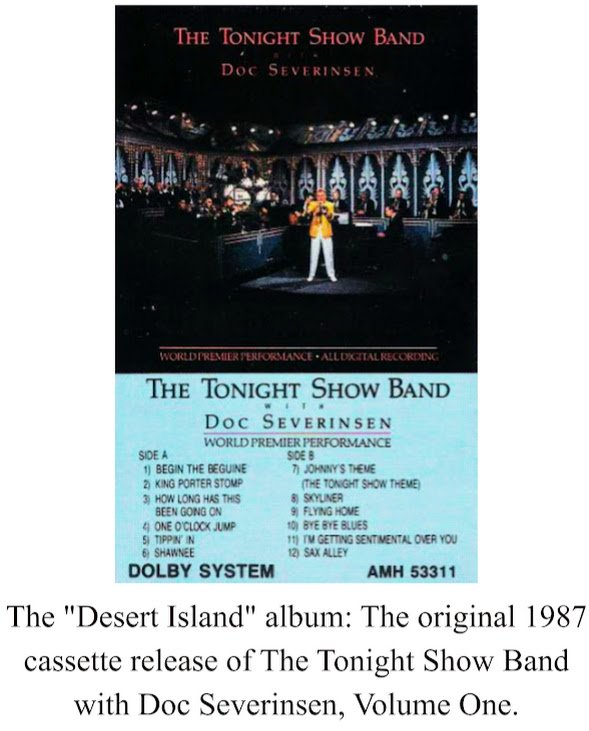
A few years later, they released Volume Two, identifiable by its bright pink cover featuring “In the Mood.” Those albums introduced me to drummer Ed Shaughnessy, who became my new Gene Krupa. No disrespect to Gene, but Ed was alive, on TV every night, and the power he brought to the drums was palpable. To this day, when I play with the Gardyn Jazz Orchestra and prep for a solo or a simple fill, I often ask myself: “What would Ed do?”
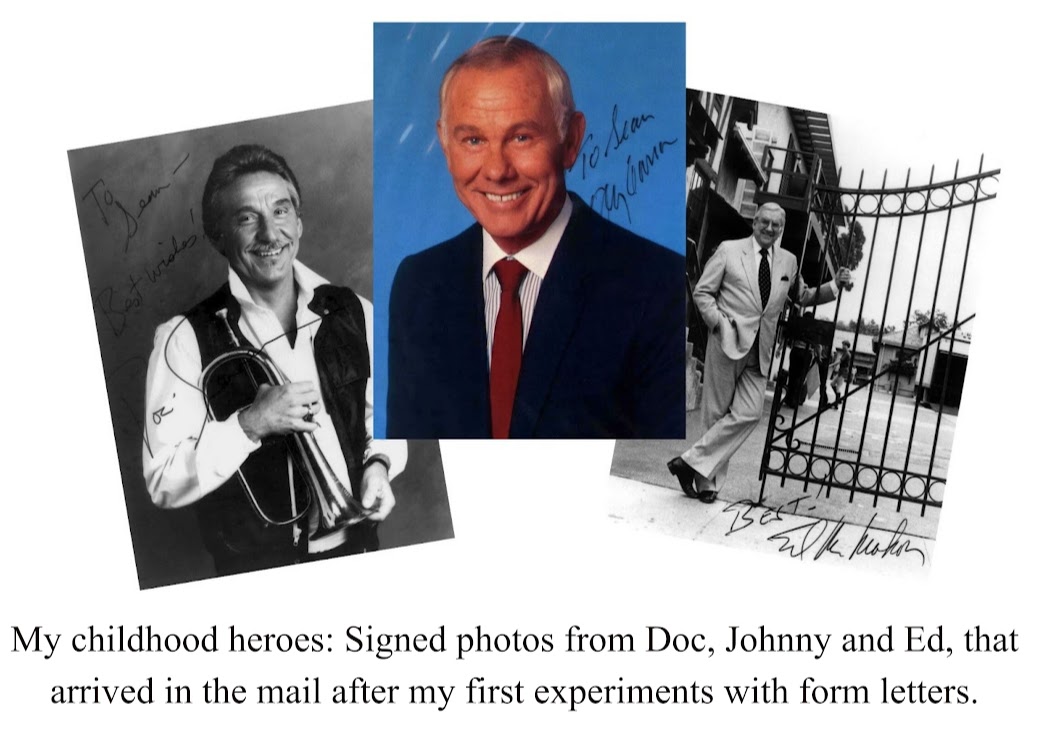
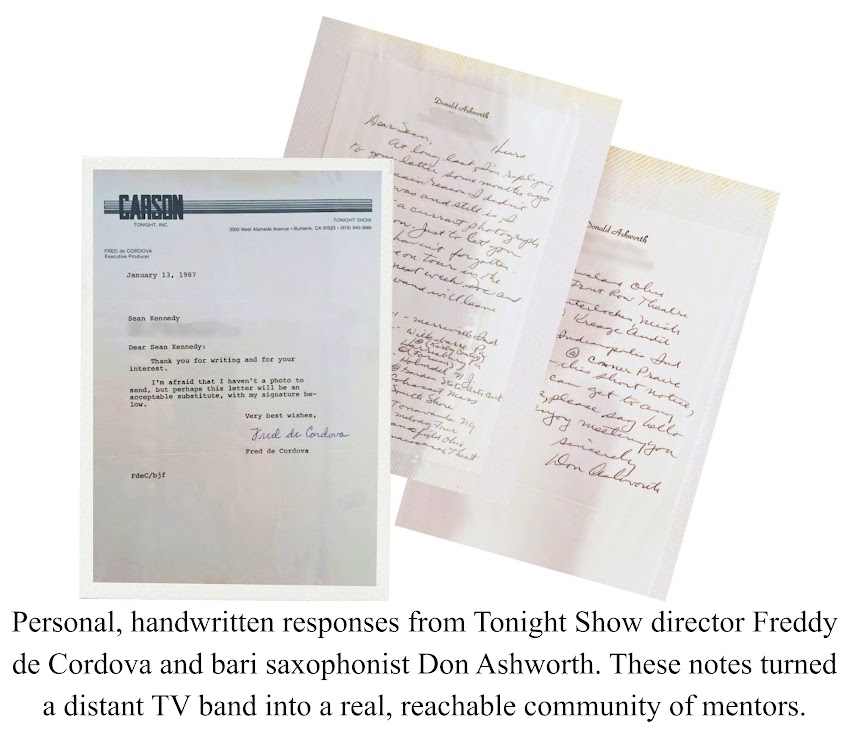
My journey with the band had actually started years prior in a more personal way. When my parents bought a desktop computer in the mid-80s, the first thing I learned to do was create form letters. I sent one to each of my heroes asking for autographs. While I received signed photos from Jimmy Stewart, Bob Newhart, and Clint Eastwood, the responses from the Tonight Show staff were the most special. I received autographed photos of Ed McMahon and Doc Severinsen, but the heartfelt letters meant even more. Don Ashworth, the baritone sax player, sent a personal note, as did director Freddy DeCordova.
This connection eventually became a face-to-face reality. I later had the privilege of meeting Ed Shaughnessy in person and chatting briefly via email. Like so many of my heroes, he was kind, gracious, and encouraging—confirming that the legends I admired from afar were as accessible as they were talented. The lineage suddenly felt personal.
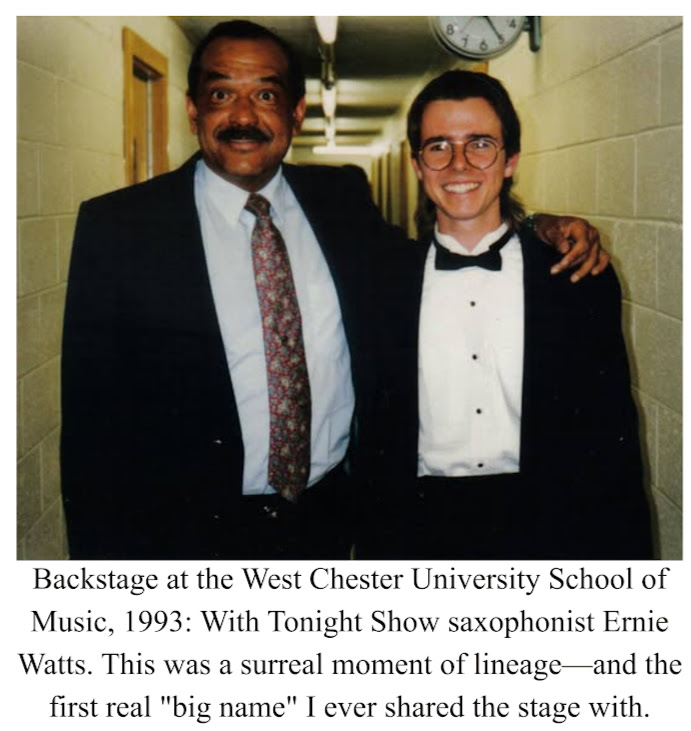
Then came a moment of pure serendipity. In 1993, I had the incredible opportunity to perform with Ernie Watts, the band's long-time saxophonist, when he was a guest artist at my college. He sat in with our big band, and for a brief moment, I was sharing the stage with an idol whose music had shaped my DNA.
In February 2019, I was serving as a guest judge at a high school jazz festival. My role was rhythm section specialist, coaching student drummers, bassists, and pianists. After the event, the clinicians sat down for dinner, and that’s when I met Jay Webb, a phenomenal trumpet player who now tours with Cory Wong and Lake Street Dive.
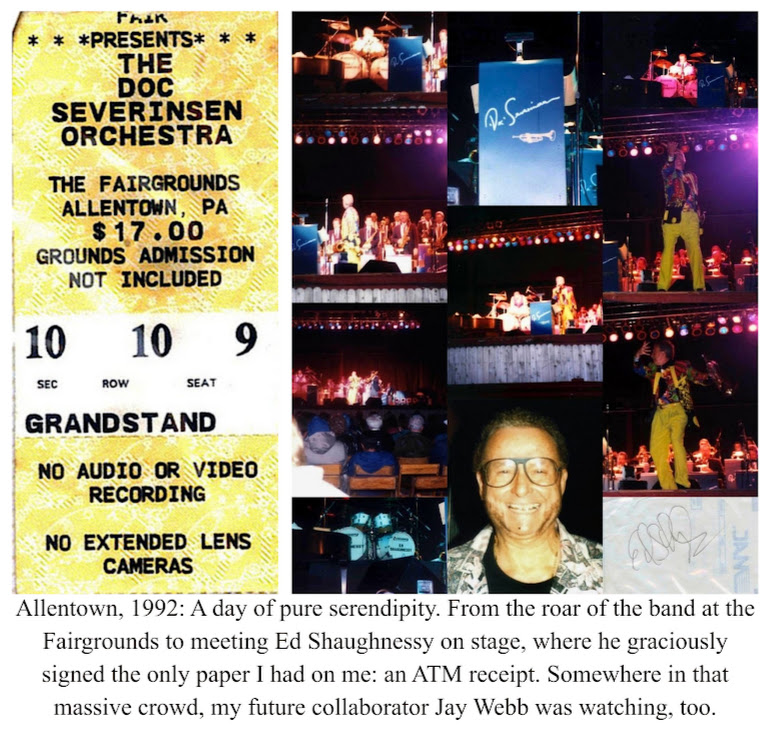
As we talked, we discovered that in 1992, when we were both in college, we had attended the same concert in Allentown, Pennsylvania: the final live tour of Doc Severinsen and the Tonight Show Band. I even found an old photo from that day. There we were, unknowingly sharing the same formative experience. Nearly 30 years later, that shared history turned into a collaboration.
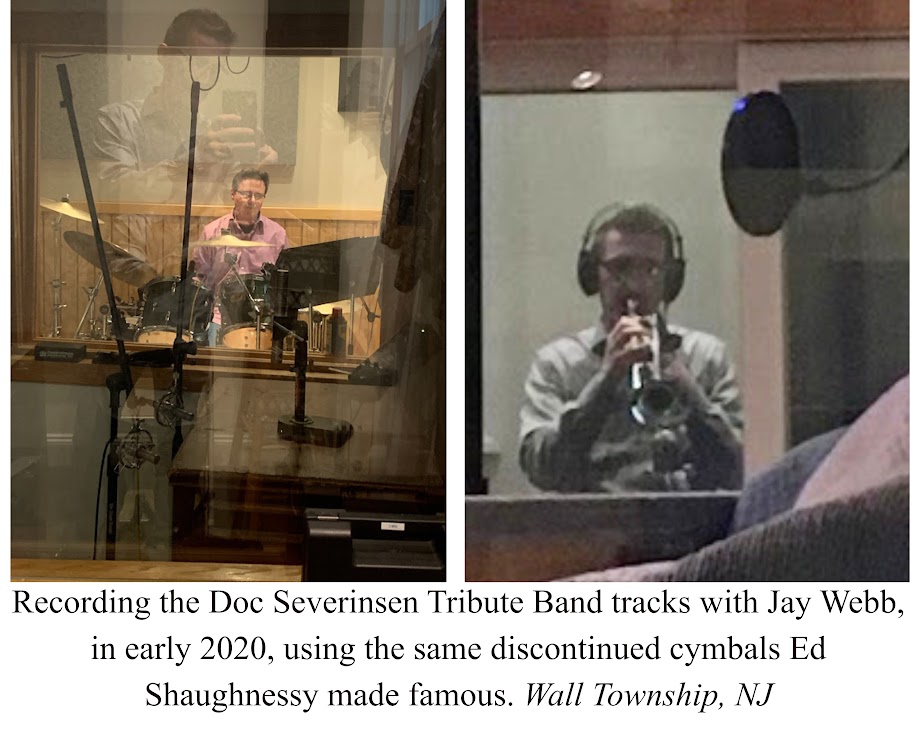
Jay started a Doc Severinsen tribute band, and just days before the world shut down in 2020, we recorded three Tonight Show tracks in the studio. We poured our hearts into the sessions. I even tracked down the exact discontinued cymbals Ed Shaughnessy used on the original recordings, scouring eBay to capture his specific "wash" and "ping." The results were so authentic that YouTube’s algorithm actually flagged our videos as the original Doc Severinsen recordings.
If I had to take just one album to a desert island, it would be that first Tonight Show Band record. More than any other piece of music, it embodies everything I love: energy, craft, swing, and a relentless commitment to excellence. Doc’s trumpet, those pristine arrangements, and Ed’s drumming lit a fire in me that still burns.
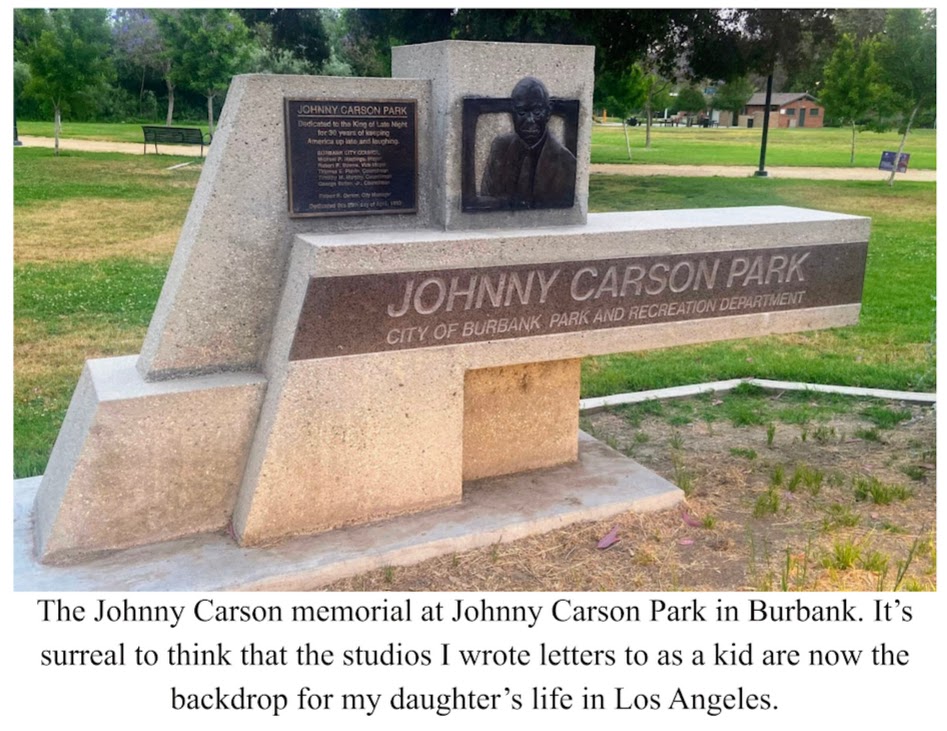
The legacy continues to follow me. One of our daughters now lives in Los Angeles, and one of her favorite spots to relax is Johnny Carson Park, located right behind the old Burbank studios. It feels as if the circle has finally closed.
Doc, Ed, and that band didn’t just entertain; they modeled a way of being a musician. They were rooted in joy and respect for the craft. Their sound became a compass for me, guiding how I listen, how I play, and how I teach.
Some musical influences arrive like lightning bolts. Others settle in quietly and stay for a lifetime. This one did both.